
The amount of people working from home has tripled the last couple of years and it often feels as though there is a disconnect between the work employees do and how often they are recognized and commended for it.
It’s vital that you show your employees how much they mean to your organization. A great way to do that is through an Employee Recognition Form (ERF).
An ERF allows people from a workplace (either employer or employees) to nominate a worker who they believe has performed exceptionally to some degree. These are usually held over a certain period of time: for example, “Employee of the Month/Year Award”.
But how do you go about setting it up? What do you need? And why is recognition important in the first place?
If you’re just here for the template, click here to view and download.

Why is Recognition Important?
Recognition and appreciation is one of the largest drivers of employee motivation and satisfaction. It is a fantastic way to highlight outstanding work, or exceptional behavior in the workplace.
A survey conducted by The Society for Human Resource Management (SHRM) found that:
- Employee recognition programs helped over half of the companies surveyed improve retention rates by 68%
- Recognitions programs were more effective when tied to a company’s core values
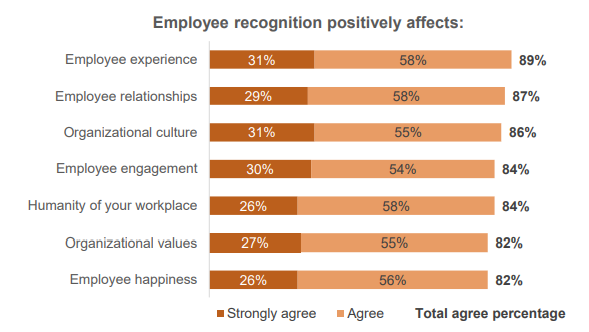
- They helped to create a more positive work environment
Gallup and Workhuman partnered for an investigation that studied the effects of recognition in different industries. They reported:
-
- Only 18% of healthcare workers reported being recognized in their organization
- If healthcare employees had been recognized and praised within the past seven days of work, there was a “significant decrease in patient safety issues”
- A meager 11% of manufacturing employees said that their place of work had a way of recognizing the efforts of their workers (which led to feelings of disconnect from the business, a lack of community, and a lack of “connection and collective work toward a common goal”)
- A major lack of recognition amongst retail employees led to higher turnover rates, lowered satisfaction, and a low feeling of fulfillment
Of course, managers aren’t always around to monitor everyone at every point of the day. And those who are about are often called micromanagers, which is something you want to avoid. Therefore, it’s important to get insight from those closest to an employee – their fellow co-workers and team members.
Scheduling the frequency of your recognition awards allows your employees to submit their responses with advanced warning. Make sure that everyone you are responsible for is aware that award nomination forms are available, as well as what the criteria is for responses. After all, you don’t want a situation where only half of your workforce was made aware of the initiative and therefore people miss out on the opportunity.
What is an Employee Recognition Form?
An employee recognition form is a structured tool that allows organizations to capture acts of excellence and celebrate contributions in a formal way. Unlike a casual email or a passing word of thanks, a form creates a record of recognition that can be reviewed, analyzed, and even tied into performance management systems. It ensures that appreciation is not just spontaneous but also equitable and aligned with company values.
Recognition forms can take many shapes. In some organizations, they are digital forms embedded into HR software; in others, they are Google Forms or printable nomination sheets used for awards programs. Regardless of the format, the purpose is the same: to provide a clear pathway for employees and managers to acknowledge effort, innovation, and teamwork.
Elements of a Recognition Form
Recognition or award forms can change shape depending on your company, what sector it’s in, and what aspects of an employee’s work you wish to highlight. Here is a list of commonly found features, but this is by no means exhaustive.
- Nominator’s name and department (this prevents people nominating several times)
- Who the nominee is (an individual or a team) and their department
- Award categories (reason they’re nominated)
- Their teamwork
- An innovative idea
- An action or significant contribution
- Their behavior and ability to make the work environment a better place
- Something pertaining to a customer
- Something community or volunteer-oriented they orchestrated/were a part of
- Give specific examples of what they did in order to be nominated, so this can be checked against eligibility of entry
- How has this positively impacted the company?
There are more selective details, such as if you use employee IDs, but below we have tried to create the most inclusive form possible that all companies can adopt. For companies where this data may be used in other situations, such as in marketing or analysis, make sure to include an enlightened consent form. Your employees should always know exactly what is being done with their data.
Types of Recognition and How Forms Support Them
While forms are the structure, the recognition itself comes in many forms, each with its own impact. Public recognition often takes place in a team meeting or company-wide announcement, making the achievement visible and celebrated by others. A recognition form can provide the information needed for a manager to share these stories effectively.
Private recognition is equally powerful, particularly when it comes in the form of a thoughtful note or email. Submissions on recognition forms can guide these private acknowledgments, ensuring they are specific and heartfelt.
Peer-to-peer recognition is becoming increasingly popular because it encourages employees at all levels to celebrate each other’s efforts. A recognition form gives peers an easy way to nominate colleagues and ensures that their voices are captured alongside managerial feedback.
Structured recognition—such as awards tied to hitting KPIs or achieving cost-saving targets—relies heavily on forms. These forms ensure consistency across submissions and make it easier for HR to verify and evaluate nominations.
There is also recognition tied to milestones, such as work anniversaries, promotions, or years of service. Forms ensure these achievements are documented and celebrated consistently. Finally, team or project recognition highlights collaboration, reminding employees that success often comes from group effort rather than individual achievement.
When to Recognize Employees
Timing is a critical factor in making recognition meaningful. Employees should be acknowledged as close as possible to the moment of achievement, when the action is still fresh in everyone’s mind. Recognition forms help facilitate this by providing a quick and structured method for capturing the event.
Forms are particularly valuable in highlighting behaviors that reflect company values, achievements that exceed expectations, and contributions that often go unnoticed. For example, an IT specialist who spends hours troubleshooting behind the scenes may not appear in performance dashboards, but a peer recognition form ensures their efforts are brought to light. Recognition is also important at milestones such as completing a complex project, onboarding new clients, or celebrating anniversaries. Even measurable outcomes, like reducing error rates or surpassing sales goals, can be formally recognized and tied to performance improvement strategies.
Sample Employee Recognition Form Template
Here is a practical template you can adapt for your organization:
Employee Recognition Nomination Form
Employee Name: ___________________________
Department/Role: ___________________________
Nominator’s Name: ___________________________
Reason for Recognition: _____________________
Description of Achievement (include specific examples):
Suggested Recognition or Reward (optional): ____________________
Date: ____________________
This template can be recreated as a digital form in Google Workspace or embedded into HR software. The key is to make the form easily accessible so that recognition becomes a natural part of daily operations.
Examples of Recognition Statements
Many nominators struggle with what to write, so providing examples can encourage more detailed submissions. Instead of vague comments like “did a good job,” a well-written nomination might read:
“Alex took the lead on our product demo and impressed a major client, resulting in a new contract.”
“Priya consistently goes out of her way to support colleagues during busy periods, creating a positive team environment.”
“Michael initiated a new documentation system that cut onboarding time in half, saving the company resources.”
These examples are specific, measurable, and tied to outcomes, making them far more impactful than generic praise.
How to Get People Involved
Any company initiative needs the backings of employees behind it to get it off the ground. Get your workers involved with the scheme through actionable steps.
-
- Raise awareness through company emails and give people somewhere to contact with queries or inquiries. Remember to have communication in the forefront of your mind.
- Showcase the effectiveness of similar policies from other companies. If you can demonstrate how successful these plans have been elsewhere, then your workers may be more inclined to adopt the same initiative.
- Set a clear deadline. That way, people can work around or towards it and it won’t come as a surprise. It would be gutting for people to realize that after all the hard work they’ve put in they have missed the deadline.
- Be realistic with your criteria and set clear parameters. No one appreciated unreasonable expectations – reward your employees for their current capabilities and reach and focus on how it is benefitting your company now. There’s always time to push for further greatness, but success and growth don’t come overnight.
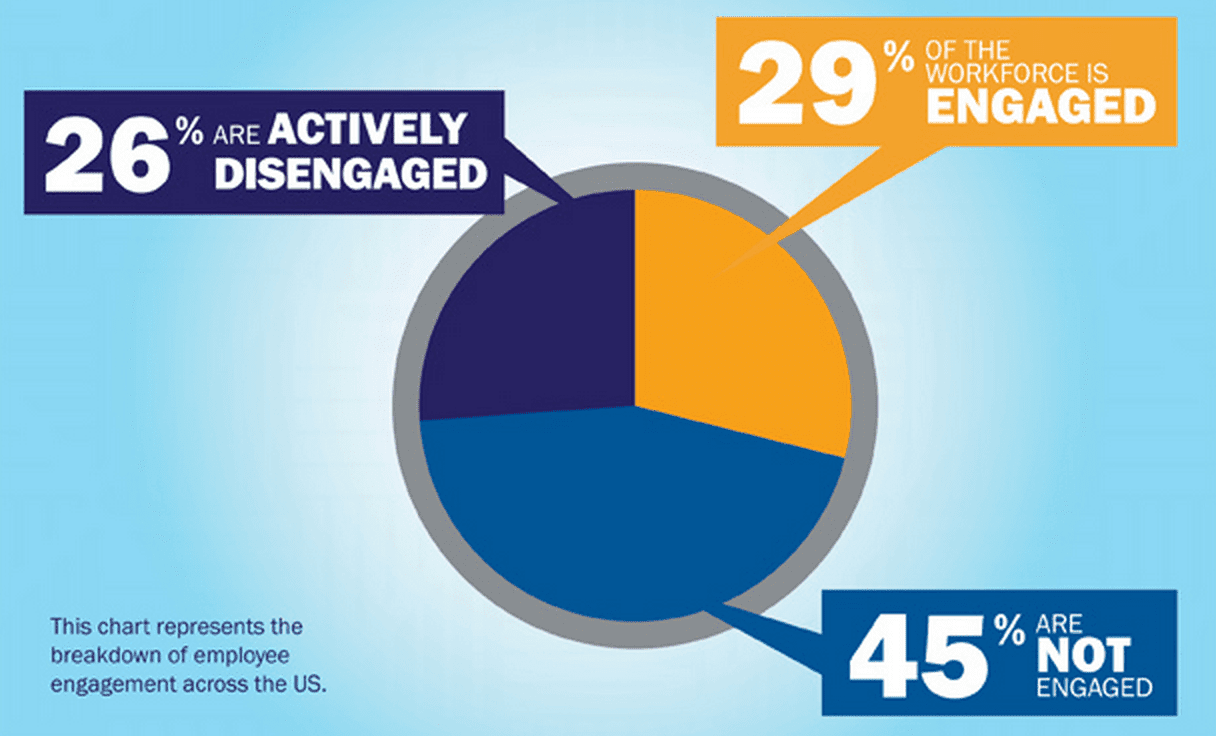
You need to be aware of the attitudes within your company, such as your previous levels of engagement. Make sure that this system is one that your employees will be enthusiastic about and will actively participate in. If you find that engagement as a whole is low in your workplace, you should look at helpful guides that offer structured advice for boosting engagement.
Things to Consider
You want to make sure that your employee recognition nomination forms maintain a high degree of accessibility. Everyone should have a fair and equal chance of being nominated for their efforts. It may be that the same few people are nominated over and over again. That’s alright, as long as you create an environment of equal opportunity, it is up to the employees themselves and their personal performances to decide the outcome.
Although the process of selecting an award recipient should be fairly democratic, make sure that your staff members remain unbiased. If they are involved with the administrative roles of tallying forms then they should remain impartial. A dedicated employee recognition committee branch of HR would be a good idea.
Establish a set of criteria before nominations open that your employees can refer to. You don’t want to make this list overly strict, but you might be accused of sending mixed messages if an employee is simultaneously having disciplinary action taken against them whilst being nominated for an award.
Final Thoughts
Recognizing your workers doesn’t necessarily mean constantly praising them. You risk becoming inauthentic over time as a result. It can be found in the smaller things, such as celebrating an employee’s birthday, listening to concerns or advice and acting on it, or hosting end-of-year parties.
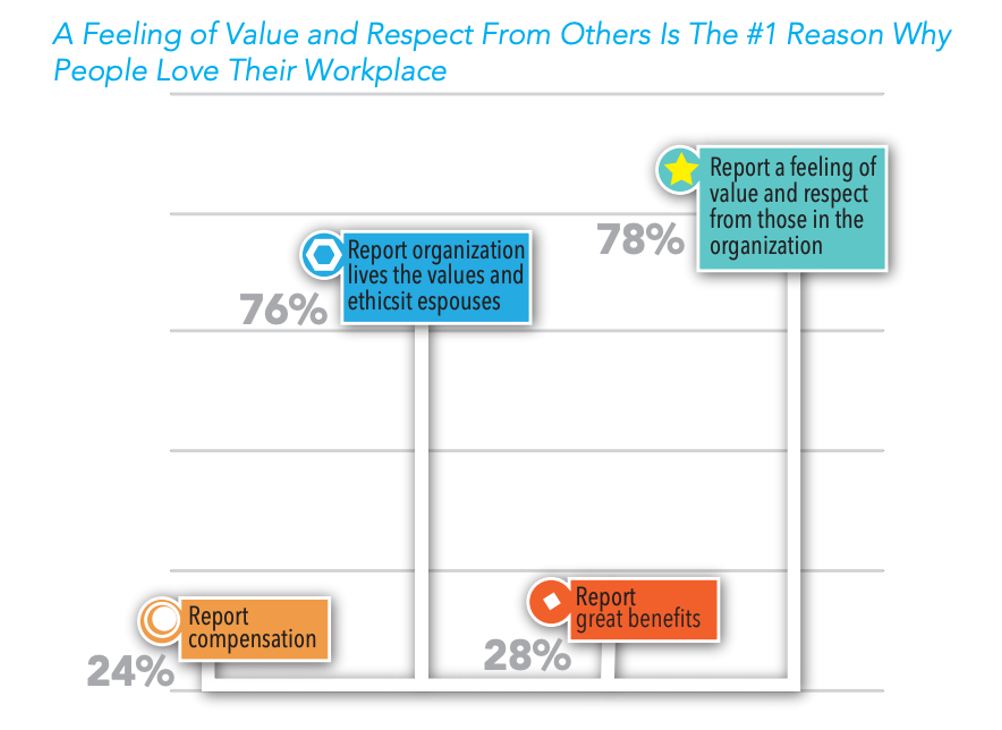
A large part of feeling recognized is feeling valued. A survey of 175 companies across the world found that 78% of employees think feeling valued and respected is the main reason why they love their workplace.
Take the necessary steps to ensure that your employees know how much you value them, not only as workers, but also as individual people. Recognize their efforts for your company and reward that loyalty. Then you can foster a more enjoyable and supportive work environment for everyone to love.
0 Comments